



Think of how those dripping pots or even stepping in your living room only to see it filled with water can cause water damage, because it can occur without any warning when you think that it is your safe nest, and then, it becomes your nightmare. Unless you take immediate and professional action, water can weaken your home’s foundation, promote harmful mold growth, and quickly use up your savings. Don’t allow water to cause havoc in your home and health. This essential guide key unlocks it all, water damage cleaning and restoration, giving you the information to respond swiftly, retrieve your home, and forestall disasters ahead. Be it a bursting pipe, storm flood, or a leaking pipe that is not noticeable, read on to protect what matters most.
What Is the Meaning of Water Restoration?
Water restoration is the term used to define the professional cleaning and repair of a property that has suffered due to water disruption. This involves detection of the water source, elimination of surplus moisture, drying of affected places, disinfection in order to inhibit mould development, and restoring the structures to the initial state. The objective is to get your property to a safe, dry and habitable condition, plus minimizing long-term damage.
Major Causes of Water Damage
Knowledge of the usual nature of the water damage may enable homeowners and commercial property managers to take the necessary measures in time. Major causes include:
- Burst or broken pipes: Naturally, the water can break out in vast amounts through broken and frozen pipes or aging pipes.
- Natural disasters: Huge volumes of water loss normally come about due to heavy rain, hurricanes, or storms.
- Sewage overflow: Spills (and non-spills) in wastewater can contaminate any indoor space with sewage.
- Failures of appliances: Use of faulty appliances, e.g., the washing machines, water heaters, or dishwashers, can either leak or spill.
- Leaks of the roof: The damaged or old roofs may allow the influx of rain into the ceilings and walls.
- Poor drainage: Issue occurs when gutters are clogged or improperly graded, which causes water to stagnate close to foundations, causing flooding in the basement.
Types of Water Damage That Affect Commercial Buildings
Depending on the types of severity and extent of contamination, it may cause water damage in the commercial structures of various types. These different types are paramount when it comes to the selection of the proper route of cleanup and restoration that can be undertaken to not only safeguard your property, but also help to save the lives of the people living there.
- Causes of Clean Water Damage usually find their way into the thing damaged through a broken pipe, faucet, or water leaking into a part of the damaged area. This water is usually not contaminated with dangerous chemicals; hence, it is easier to clean up. However, untreated or even well water can find its way into construction materials and can provide good breeding grounds for the growth of molds and structural degeneration.
- Gray Water Damage is the water that contains some form of contamination and may be caused by appliances like dishwashers, washing machines, or sink water leaks. This water can be polluted with chemicals, liquids, or microorganisms that can cause a threat to average health. Gray water should be handled in a thorough manner in order to avoid the occurrence of diseases due to the possible contaminants and additional damage.
- The most risky damages are Black Water Damage ones. This is water that is polluted by sewage, flooding or stagnant water with dangerous bacteria, viruses and toxic substances. Black water is dangerous to health and requires priority professional actions involving the use of special technologies and security measures. Awareness of the potential serious contamination by a failure to respond to the threat of the black water structure, the high cost of restoring it, and incidental legal claims is certain in commercial spaces, where employees and buyers otherwise come into the equation.
How Long Does Water Damage Restoration Take?
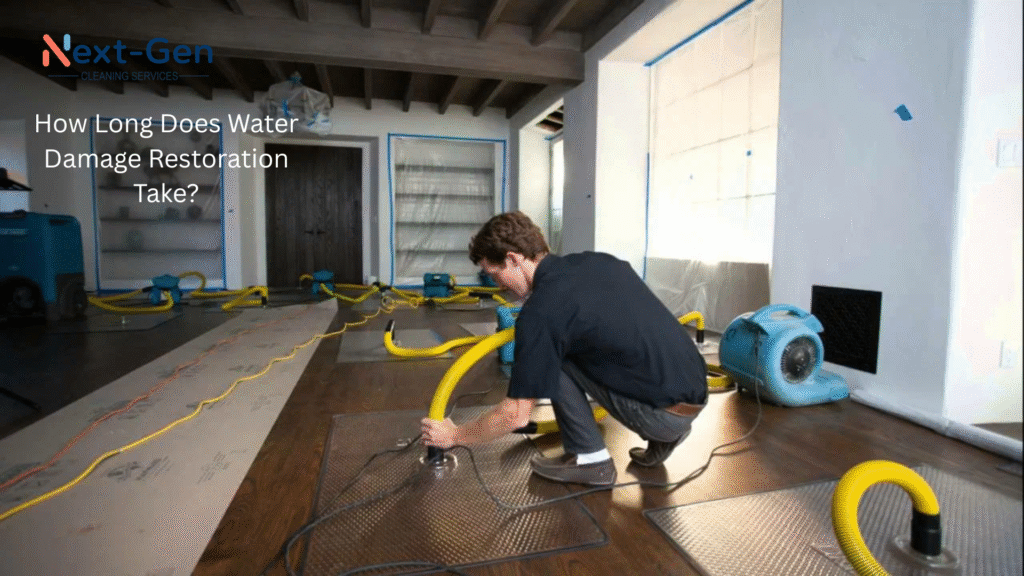
The time that it would require to restore the part of the area damaged by the water can vary significantly with various factors that should also be taken into account: the power of the water infiltration, the type of fluid that entered the area (clean, gray, or black water) and the total size of the damaged area. All the processes constitute a restoration process and all the stages should be undertaken with utmost seriousness; skipping or rushing any stage can lead to incomplete drying or hidden damage that worsens over time.
- Inspection and Assessment (1 to 4 hours): A programming inspection will be conducted by professionals to find out the source of water, the volume of the damage, and the materials used. This will assist in establishing the basis of a particular restoration plan and finding out what resources are needed.
- Water Extraction (Several hours): It is necessary to be fast when extracting standing water before it finds its way into the floor, walls, and furniture. The extraction period is determined by the amount of water required to be removed, as well as the accessibility of the area.
- Drying and Dehumidification (2 to 5 days or more): Post-extraction, drying proceeds with the application of specialized drying equipment such as air movers and dehumidifiers that will work round-the-clock to remove any moisture on the inside of building materials. It is also usually the most time-consuming stage because when drying is not finished, it may cause mold and structural problems. Where there is extreme water damage or excess humidity, it can take a full week or longer to dry out.
- Cleaning and Sanitizing (1 to 2 days): After drying out the affected area, cleaning and disinfecting the affected area is important if there was the involvement of grey/black water. This action safeguards the people around the place and avoids health hazards.
- Restoration and Repairs (Several days to weeks): When it comes to restoration of company property damaged over time, experts restore and replace destroyed items using drywall, flooring, and insulation. The completion date will require a schedule based on the complexity of the repair and the contractor’s availability.
Water Damage Restoration Process
To have a complete clean-up and repair, several main steps should be incorporated in the water damage restoration process:
- Assessment and inspection: In order to establish the source of water, professionals cleaning check and identify the water type.
- Water removal: Standing water is lifted out quickly with pumps and vacuums to allow no additional absorption.
- Drying and dehumidification: Strong-powered fans and dehumidifiers dry up substances such as drywall, flooring, and furniture.
- Cleaning and disinfection: The cleaning and disinfection of surfaces have a deterrent effect on the debridement of dirt, bacteria, and mould spores.
- Repairs and restorations: Damaged materials are replaced or reconstructed (drywall, flooring and structure).
- Final inspection: A final inspection is proper to identify that all the affected areas are dry, clean, and safe.
Typical Cost for Water Damage Restoration
The restoration expense of water damage would depend on the level of restoration and water damage that might be needed. Average price ranges:
- Minor extraction and drying of water: $1,000 – $3,000.
- Moderate damage restoration (also includes repairs): $3,000 – $7,000.
- Significant restorations with structural repairs: $7,000 – $15000 and above.
Factors that influence cost include:
- This includes the affected size of the property.
- Location and accessibility
- Materials and work force.
- Insurance cover and deductibles.
- Water incursion and destruction.
Preventing Future Water Damage in Commercial Properties
To reduce the risk of expensive damage related to water, take these prevention tips into account:
- Regular check and repair of plumbing.
- Make sure the roofs are well fixed.
- Keep gutters clean and ensure good drainage is not a problem near foundations.
- Install backflow and sump pumps.
- Check and replace with old appliances.
- Install a water waking and alarm.
- Keep landscaping to ensure there is no pooling of water.
Proactive measures provide security to your building and the value of your business premises.
Conclusion
They should clean and restore your commercial space or a home through water damage restoration, as it will save your property against damage in the long term. Being fast and knowing how to restore the motor vehicle, tourism parks or landscapes, and being able to avoid incorrect experiences before can also save time, money and stress. To get the best services, entrust skilled water damage experts to revive your property. In case of any water damage, do not hesitate to contact NextGen Cleaning Service with an expert assessment and effective restoration options depending on your requirements.
FAQ’s
Smaller leakages may not be too big a problem, as serious water damage may need tools and skills normally found among expert professionals, particularly in case of any risk of mold or water pollution.
The sooner you start, the better, so that damage and not much mould can be formed.
Black water is contaminated with dangerous sewage or flood water and is very dangerous to health. This is to be professionally cleaned.
Several drying, cleaning, and disinfecting steps in the next 48 hours will be important to decrease the risk of the advanced growth of the mold.