



A hygienic restaurant will ensure that the clientele is safe and comfortable and it will look forward to returning. And yet not cleaning is all alike. Certain tasks have to occur numerous times per day. Others are more specific and require additional time, equipment, and, in other cases, assistance.
Restaurant and deep cleaners collaborate on daily restaurant cleaning. Daily cleaning ensures that your space is clean. Deep cleaning will ensure that your kitchen and dining spaces have a complete overhaul and hence remain clean and health-compliant. By doing something to strike a balance between them you safeguard your consumers, your employees and your brand.
What Is Daily Restaurant Cleaning?
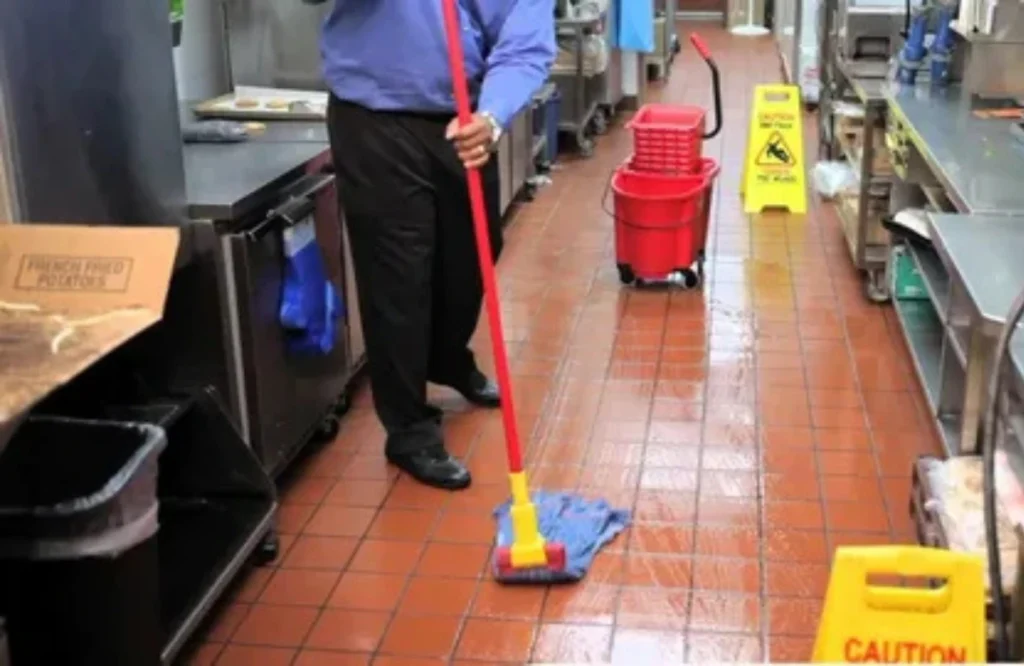
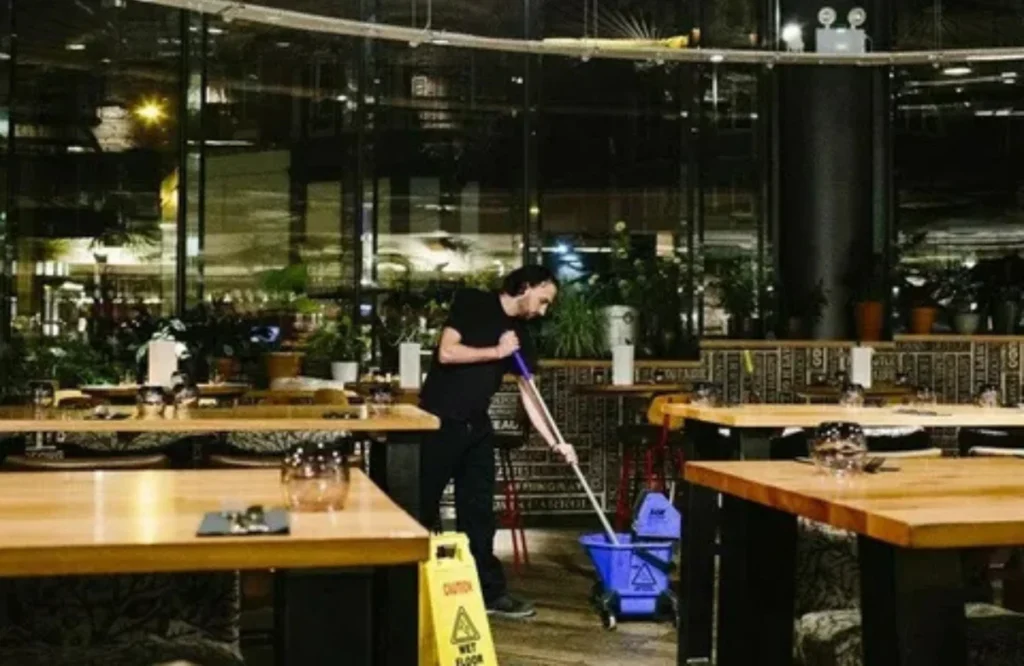
Daily restaurant cleaning incorporates all the activities your team performs several times every day to ensure that everything is tidy, safe, and presentable. It includes the cleaning of the kitchen and the dining area.
Scope of Daily Cleaning
Most restaurants include these areas in their daily routine:
- Front-of-house: Tables, chairs, booths, menus, host stand, bar tops
- Floors: Sweeping and mopping in dining room, kitchen, and service areas
- Restrooms: Toilets, sinks, mirrors, floors, and high-touch points like door handles
- Kitchen surfaces: Prep tables, cutting boards, line equipment surfaces
- Service areas: Soda stations, condiment stations, POS counters
- Waste areas: Trash cans, recycling, and food waste bins
Frequency of Daily Tasks
Daily cleaning happens:
- Before opening
- Subway service (between rushes and between guests)
- After each shift
- At closing time
A clean-up plan in restaurants also aids in allocating duties to every shift of the restaurant to avoid missing any.
Purpose of Daily Cleaning
The main goals are:
- Have the restaurant look tidy and friendly.
- Keep a low hygiene level during the day.
- Fewer spills, crumbs and showing dirt.
- Check for odors and grease that are seen.
- Use between the deep cleans supports food safety.
Examples of Daily Cleaning Tasks
Here are common daily restaurant cleaning tasks:
- Cleaning tables, chairs, and menus with each customer.
- Cleaning and wiping floors in the dining room and kitchen.
- Between tasks and before/after service, Cleaning prep areas and line surfaces.
- Washing of cutting boards and cutting tools.
- Cleaning and refilling trash and recycles.
- Washing soda and coffee machines and beverage counters.
- Cleaning walls, doors and glasses where necessary.
- Wiping and replenishing toilet fittings multiple times in a day.
These best practices of cleaning in restaurants provide your staff with a routine that can be easily followed and easily checked.
What Is Deep Cleaning for Restaurants?
Restaurant deep cleaning is far beyond wiping and mopping every day. It goes behind, underneath, and even inside the equipment and space that do not form a part of the fast everyday routine.
Scope of Deep Cleaning
Deep cleaning usually includes:
- Commercial kitchen cleaning: In the background of ovens, fryers, grills, and equipment.
- Ventilation and exhaust: Ductwork, filters, and at times hoods.
- Storage facilities: Dry storage shelves, walk-in coolers, and freezers.
- Walls, ceilings and baseboards: Particularly in and near cooking and dishwashing areas.
- Places that are not readily visible or accessible sites: Corners, under mats, behind the appliances.
- Thorough cleaning of the restrooms: Vents, corners, and fixtures of the restrooms, and grout.
These tasks are carried out by professional restaurant cleaners or restaurant janitorial services in many restaurants, particularly when the tasks require a lot of grease or specialty chemicals are needed.
Frequency of Deep Cleaning
- Volume of business
- Type of cooking (high-grease cooking should be deep-cleaned more often)
- Local fire and health codes
- Equipment manufacturer instructions.
Common patterns:
- Weekly: Line equipment, floors, drains, and part of the storage areas clean-up.
- Monthly: Work more intensively behind and under major appliances.
- Quarterly or semi-annually: Cleaning of full-service restaurants, high walls, ceilings and full hood / Exhaust cleaning.
The written deep cleaning schedule of restaurants would help you to organize these activities and arrange with the outside provider.
Purpose of Deep Cleaning
Deep cleaning focuses on:
- Eliminating grease, grime and residue that the daily cleaning lacks.
- Eliminating contamination in unseen places.
- Facilitating compliance and inspection preparedness of food safety.
- Minimizing fire hazards due to the existence of grease in hoods and vents.
- Prolonging the service of costly kitchenware.
- Bettering air quality and the general control of odors.
This is one of the major components of restaurant maintenance solutions, not merely an additional cleaning.
Examples of Deep Cleaning Tasks
Deep cleaning tasks often include:
- Reduction of fryers, grills and ovens, both behind and underneath.
- Cleaning exhaust hoods, filters and walls around.
- Cleaning floors, grout and floor drains using a heavy-duty cleaner.
- Washing and sanitizing the walls of walk-in coolers and freezers, shelves, and gaskets.
- Removing equipment to brush each other back and under.
- Dishwashers and steamers will be machine-descaled.
- Full cleaning of the washrooms, such as tiles, grout, vents, and partitions.
- Washing of light fixtures, ceiling vents, high-touch and difficult-to-reach places.
This is a lot of detail that is difficult to perform in a busy service day and hence this is the reason why deep cleaning is usually undertaken when the restaurant is closed or when it is not busy.
Daily vs. Deep Cleaning: The Main Differences
Now, let’s go deep into the main concept: The difference between daily restaurant cleaning and deep cleaning for restaurants, and how both work together.
1. Frequency: How Often You Clean
- Daily cleaning:
Occurs numerous times in a day and daily when the restaurant opens. Employees clean up surfaces by wiping after every use, cleaning floors by sweeping and mopping and cleaning up the most important spots during and after service. It is an integral component of the normal workday. - Deep cleaning:
Occurs at a regular schedule on a weekly, monthly, or quarterly basis. It can take a couple of hours or even an entire day. You can either close early or set it on a closed day. In many cases, it is done by a professional or a special team of restaurant cleaners.
Consider that when cleaning the whole house, you should do it daily and clean your teeth before every meal, and when cleaning the house thoroughly, you should go to the dentist, have your teeth cleaned, and checked.
2. Scope: What Gets Cleaned
The daily cleaning of the restaurant is aimed at:
- Visible surfaces guests see
- Guidestones used by high-touch points employees and customers.
- Preparation and service of food contact surfaces.
- Convenient locations that are prone to dirt.
Deep cleaning focuses on:
- Places that are hidden or difficult to access.
- Interior and exterior of heavy equipment.
- Areas that are high e.g., vents and ceiling.
For example, wiping a prep table between tasks is daily cleaning. Pulling out the prep table to scrub the wall and floor behind it is deep cleaning.
3. Purpose: Appearance vs. Sanitation Depth
Primary intention of cleaning daily:
- Keep the restaurant looking clean and orderly
- Be of simple hygiene and avoid blatant contamination.
- Quick service with a clean work environment.
- Make spills and trash under control.
The primary reason of deep cleaning:
- Eliminating accumulation that promotes germ growth by preventing contamination in restaurants.
- Adherence to food safety, cleaning and inspection standards.
- Daily cleaning is like “staying on top of things.” Deep cleaning is “resetting the whole environment.”
4. Who Does the Work: Staff vs. Specialists
Daily cleaning:
- Your kitchen, bar and floor staff did it.
- Included in shift schedules and checklists on closing.
- Application of standard, food-safe cleaners and sanitizers.
Deep cleaning:
- May engage dedicated in-house personnel in case you have a big operation.
- Most commonly addressed by professional restaurant cleaners or restaurant janitorial services.
- Applies more aggressive degreasers, equipment and occasionally lifts equipment (when it comes to hoods and high places)
- Needs to be trained on health-compliant cleaning and safe usage of chemicals.
Professional cleaners of the restaurant are aware of the cleaning needs of a commercial kitchen and this can aid you in preventing damage to the equipment and surfaces.
5. Tools and Products Used
Daily cleaning tools:
- Mops, mops, squeegees, brooms, Microfiber cloths.
- Food-safe detergents and sanitizers.
- Basic spray cans and buckets.
- Basic brushes and scrub pads
Deep cleaning tools:
- Degreasers and descalers for heavy-duty use.
- Floor scrubbers and Steam Cleaners.
- Where necessary, pressure washers.
- Duct cleaning instruments and hoods.
- PPE such as respirators, goggles, and, on rare occasions, gloves.
The incorrect application of the wrong products to do the wrong job may lead to damage or pose safety hazards, and this explains why deep cleaning may require expert support.
6. Impact on Operations and Revenue
Daily cleaning:
- Make your restaurant presentable at all times.
- Serves well and turns tables fast.
- Effects guest satisfaction in the short run (bad impression with dirty tables)
Deep cleaning:
- Lessens the risks over the long term, such as fires, machine breakages and large-scale repairs.
- Assists you in preventing health code infractions that are reputation-damaging.
- May wants you to make additions on account of hours, and all in safety and reliability.
Those restaurants that do not give deep cleaning much attention tend to incur unexpected expenses, including grease fires or inspection failure.
Benefits of Combining Daily and Deep Cleaning
A combination of daily cleaning with deep cleaning in a single plan would provide your restaurant with several important advantages.
Safer Food and Better Hygiene
- Reduced the potential of raw foods to cross-contaminate ready-to-eat foods.
- Fewer germs on the preparation areas, tools, and equipment.
- A more effective management of food scraps pests.
- Better general restaurant cleaning services and performance.
Better Health Code Compliance
- You satisfy or go beyond food safety cleaning standards.
- You minimize the possibility of breaches and compulsory shutdowns.
- Your inspection reports remain robust and this develops confidence among the customers and employees.
Longer Equipment Life and Lower Costs
- Free equipment is easier to run and durable.
- Exhaust cleaning systems minimize fire hazards and the cost of repairs.
- Floors, tiles, and surfaces are better maintained when they are well cleaned.
Stronger Customer Experience
- Clean dining rooms, restrooms, and entryways improve first impressions
- Customers see visible cleanliness, which supports good reviews
- Staff feel proud of their workspace, which often shows in service
First impressions are enhanced by clean dining rooms, washrooms and doorways.
Customers perceive apparent cleanliness and this favors favorable reviews.
Workers take pride in their work stations, which tends to be evident in service.
Conclusion:
Deep cleaning and cleaning of restaurants on a daily basis is not a choice but an option. Your cooking and dining areas are clean, safe and welcoming to all guests each day. Deep cleaning ensures that your equipment, staff and reputation are well preserved through the more thorough sanitation and repairs.
With good best practices of rest and kitchen cleaning and daily rhythms and thorough cleanings, risks are minimized, customers are impressed, and you are prepared to face any inspection. Next Gen Cleaning Services to find more professional hints and solutions to clean the place in a spotless and health-compliant way.
FAQ’s
Most restaurants should schedule some form of deep cleaning at least once a month, with certain tasks (like hood and exhaust cleaning) done quarterly or as required by local codes and usage levels.
No. Daily cleaning is vital, but without regular deep cleaning, grease, dirt, and germs build up in hidden areas and can lead to health code issues and safety risks.
Focus on food prep surfaces, cooking lines, service counters, dining tables and chairs, restrooms, and high-touch points like door handles, POS terminals, and railings.
Professional cleaners of the restaurant are the owners of the necessary equipment, materials, and experience to clean a commercial kitchen. They are safer and more efficient in dealing with heavy grease, hard-to-reach tasks, and code-driven tasks.
Yes. Cleaning and sanitizing food contact surfaces, the use of chemicals, pest control, equipment and restroom maintenance are some of the things that most health departments demand. Never ignore or neglect your local rules.