


Facilities’ cleanliness and hygiene are not merely about the looks they have on health, safety, productivity, and the general experience of anybody utilizing the area. The maintenance of hygiene within the facilities is done every day to guarantee that the workplaces, public places, and commercial buildings are safe, comfortable, and do not violate rules. As health-conscious settings grow, it becomes central to have a stable and comprehensive hygiene routine as a measure of illness prevention, asset protection, and confidence building with both clients and employees.
This guide explores the 10 most important tasks of maintaining the hygiene of the facility daily and, therefore, helps the facility managers and Professional cleaning staff to prepare a solid maintenance strategy that addresses the current requirements of the cleanliness and safety of the facility.
What is a Facility Hygiene Maintenance Plan?
The main pillar of a healthy, efficient, and safe environment is a Facility Hygiene Maintenance Plan. It goes beyond cleaning; it is a strong offensive strategy that protects the well-being of all users of the facility. Determining the daily cleaning patterns, times, and resource control, this plan will turn hygiene into more than a routine, but a science-based system that will help avoid contamination, improve the work process, and ensure that health and safety standards are fully adhered to. Details are crucial and so this plan becomes a crucial road map to maintaining a clean, safe and sustainable facility every day.
The plan serves as a roadmap that synchronizes day-to-day operations, reduces the risk of contamination or damage, supports the idea of sustainability and promotes continuous improvement through monitoring and feedback.
10 Key Tasks for Effective Daily Facility Hygiene Maintenance
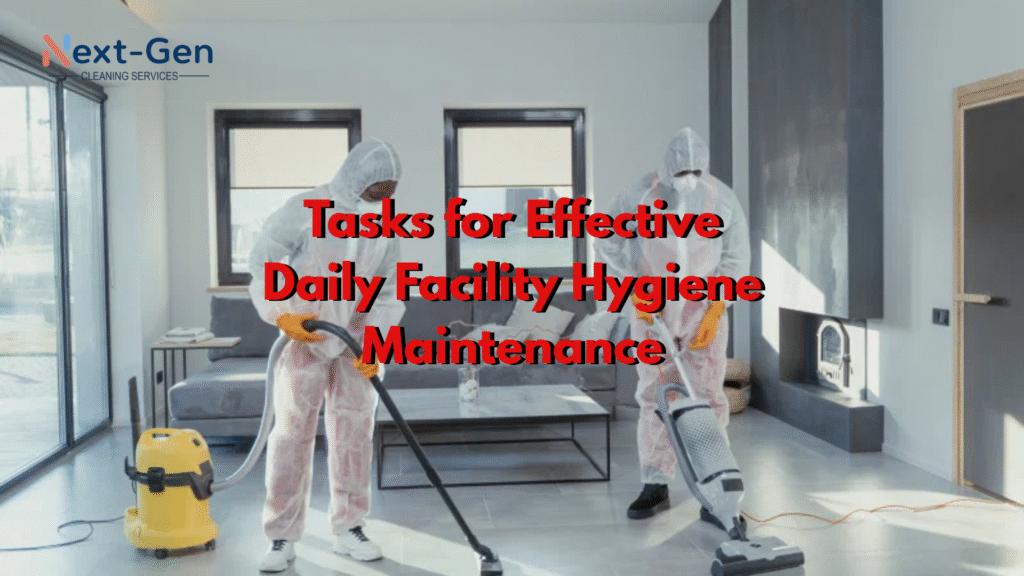
Proper daily maintenance of the facility has been a guarantee of a safe, clean, and healthy environment in all places. It entails systematic activities and minimization of health hazards and optimal operations. These top 10 activities offer a simple structure of how different facilities can always maintain cleanliness in their daily routine.
1. Conduct a Facility Audit
An effective daily plan of facility hygienic maintenance begins with a comprehensive audit of the facility. This measure will entail an overall evaluation of the existing levels of competence and insufficiency of cleanliness and the hygienic standards of the whole facility. Pay attention to the areas where people may touch and often visit, like the entrance, toilets, the breakroom, elevator keys, and similar facilities, and pay more attention to their cleaning. The other one is to identify areas of issues, such as untidy areas or spots that appear dirty. The auditor should test the effectiveness of cleaning procedures and assess the status and presence of cleaning equipment in the facility, in order to make sure that these procedures are effective enough to meet the facility’s requirements.
2. Define Maintenance Tasks
The scope of daily cleaning and hygienic activities should be defined clearly once the audit has been conducted. By breaking the facility down into areas and listing off specific tasks per area, these can include sweeping the floor, mopping, disinfecting surfaces, emptying trash bins and sanitizing high-touch point areas. These tasks need to be allocated to certain staff or departments in order to bring accountability and transparency. Moreover, include preventative maintenance procedures like the regular changing of air filters and the elimination of clutter to minimize dust build-ups and risks.
3. Prioritize Maintenance Activities
The urgency and health effects do not apply to all cleaning tasks. Prioritize the activities in terms of their significance, usage rate and the risks they pose to human health. Top consideration should be given to specific locations such as restroom areas, kitchens, elevator buttons and other objects that are prone to germs and contamination. The combination of comprehensive cleaning services and efficiency in the operations also contributes to the hygiene standard without interfering with the operational components of the facility or creating failure.
4. Schedule Maintenance Tasks
A comprehensive cleaning plan shall be prepared to carry out the cleaning process in a systematic way. During the changes, the peak hours, and other operational limitations that might disrupt it should be considered. The planning must provide time to perform regular cleaning and in some cases of emergencies. Add checklists or apply electronic media in tracking and performance of duties. The flexibility of scheduling helps schedule well in advance to the occurrence of any emergencies, like spills or contamination of any nature, to preserve the level of hygiene.
5. Allocate Resources
The maintenance plan would require proper allocation of resources to execute it. This involves ensuring the facility is assigned a sufficient number of cleaning staff depending on the size of the facility and the number of foot traffic. Provide the teams with the appropriate cleaning products and tools. Where possible, give preference to environmentally friendly and non-toxic cleaning tools to be truly environmentally friendly. Identify the budget and time allocations of each activity. Moreover, expenditure in technology, including automated floor scrubbers or UV sanitizers, could boost the efficiency and regularity of cleaning.
6. Implement the Plan
The measures to be put in place to ensure success are the training of its staff on procedures, safety procedures and the use of cleaning equipment. Inspect or provide feedback to supervisors on pertaining schedules and quality of work. Open communication between team members should be encouraged to simplify the work process and resolve any problems in a flash. A stock of cleaning supplies ensures no job is interrupted because of out-of-stock supplies or equipment that requires quick repairs or replacement.
7. Implement Health, Safety, and Environmental Protocols
Non-compliance with health and safety guidelines is unacceptable. Use safe and effective hygienic practices set by OSHA, CDC, or local authorities. Apply disinfectants that are proven to eliminate prevalent pathogens and viruses. Waste should be managed in accordance with the environmental law, which should encourage appropriate separation and disposal. Provision of staff with the necessary personal protective equipment (PPE) and training on how to work with chemicals safely, minimizing health risks.
8. Develop Performance Metrics and Continuous Improvement Processes
It is possible to use established performance indicators to ensure high standards are maintained. Measure performance based on cleaning tasks by frequency, cleaning rate and occupant satisfaction. Periodic audit and inspection offer information about your performance strengths and areas where you need to improve. Review this information to change the number of people to be on staff, the time during which to do tasks or the way the task should be carried out. Promotional culture must exist in terms of constant training and feedback, encouraging constant learning and improvement of the process.
9. Emergency Preparedness
They should have the means to counter unexpected hygienic disasters, such as spills, contamination, or outbreaks of infectious diseases. Establish the proper procedures to use in such scenarios, including the steps to follow and improve communication. Have emergency cleaning specials available with all supplies on hand. Prepare train personnel to act swiftly, with great safety and efficiency. Collaborate closely with health and safety departments to achieve adequate management and the least possible destruction in the event of an emergency.
10. Documentation and Training
No guesses to do with transparency and accountability. Keep records of cleaning shops, work on schedules, supply consumption, and audit results. This will assist in the adherence to protocols and it will assist in tracking the patterns or frequently repeated problems. Introduce continuous training so that employees get to know about the new methods of cleaning, safety levels and rules. Periodically review use logs and evaluate the extent of professional/technological performance, and use logs to facilitate the ongoing improvement program.
Facilities Management Checklist for Safety Protocols
- The cleaning chemicals should be properly stored, labelled, and used.
- Make sure that every cleaning personnel member wears proper personal protective equipment (PPE).
- Post prominent pressure ulcer hygiene signs.
- Frequently check floors and surfaces (specifically look at whether they are damaged or not).
- Apply social distancing and health promotion protocols in health emergencies.
- Maintain the availability and cleanliness of the emergency exits and fire safety equipment.
Implementing a Regular Cleaning Schedule
It is also important to set a schedule as a permanent accountability for daily facility hygiene upkeep. Here’s an example framework:
- Morning: Clean unclean surfaces with a high number of contacts, empty bins, and wipe down common environments.
- Noon: Vacuuming, bathroom inspection and cleaning, replenishing of consumables.
- Afternoon/Evening: Cleaning floors intensively, breakrooms, wiping meeting rooms.
- Weekly/Monthly: Replacement of air filters, cleaning windows, the complete cleaning of the carpets.
Conclusion
Hygiene maintenance of facilities is vital in the maintenance of health, safety and service excellence in any facility. The steps described in this paper, which adhere to the 10 main steps, will help establish a strong and effective maintenance plan that proactively responds to the issues of cleanliness, including conducting audits, training employees, and much more. Facility managers can provide safe, inviting working conditions and guard the professionals’ well-being daily by implementing safety measures, planning their schedules appropriately, adopting technology, and being willing to improve the environments to build safe conditions in them. NextGen Cleaning Service will be your partner in ensuring your facilities are well-maintained in a clean, healthy environment, and as such, you should use their support to create and implement your daily facility hygiene maintenance plan. Call us now to get a consultation!
FAQ’s
Keep tasks up to date monthly or quarterly, depending on changes in facility use, shifts in the industry, or new health guidance.
Use EPA-registered disinfectants suitable for industrial use, prioritizing those with low environmental impact.
generation supplements but does not completely replace manual cleaning, especially for detail-oriented tasks and human oversight.
Offer PPE, training on chemical use, and follow occupational safety standards.
Put into effect emergency cleaning protocols, increase disinfection frequency, restrict access to affected areas, and talk to occupants.