


Workplace cleanliness is not just a matter of appearance; it is the key to the health, safety, and productivity of employees. Custodians are the essential heroes who, in effect, provide the environments that are free of any hazards. This is especially the case in Riverside workplaces, where the safety standards have been set at a very high level. It is not only offices that are affected, but also schools and industrial settings where the custodians are met with many difficulties, some of which require them to be properly trained and to always be alert.
Not taking safety seriously might result in accidents and it might also disrupt the work in the organization in a way that it becomes expensive to get back to normal functioning. It is for this reason that the custodial safety tips for Riverside workplaces play a great role in the safekeeping of the custodians and also the people who are around them. The understanding of these hazards is very important from the aspect of prevention of falls, chemical exposure, efficient handling of the ergonomic risks, as well as emergency cleanups. This guide provides practical tips and also helps workers to work safely while they meet the regulations stated in Riverside.
General Safety Guidelines for Custodians
Those who clean the facilities are exposed to the same kind of dangerous situations every day, for instance, the utilization of chemicals and heavy lifting, which may result in physical harm to them. In the majority of cases, the general safety guidelines, when implemented properly, can go a long way in the prevention of accident occurrences and injuries to a great extent.
- Make sure you strictly adhere to the appliance’s instructions for house cleaning products as well as hardware.
- Put out warning signs to keep the passing traffic informed that the floor is still wet or that a cleaning exercise is currently underway.
- Do not ever hurry through work; taking the time to be cautious is what will save you from the mishaps of falling and getting injured.
- Immediately report to your supervisors any conditions or equipment that are unsafe.
- Keep areas such as pathways free and remove unneeded items from the common areas.
Personal Protective Equipment (PPE)
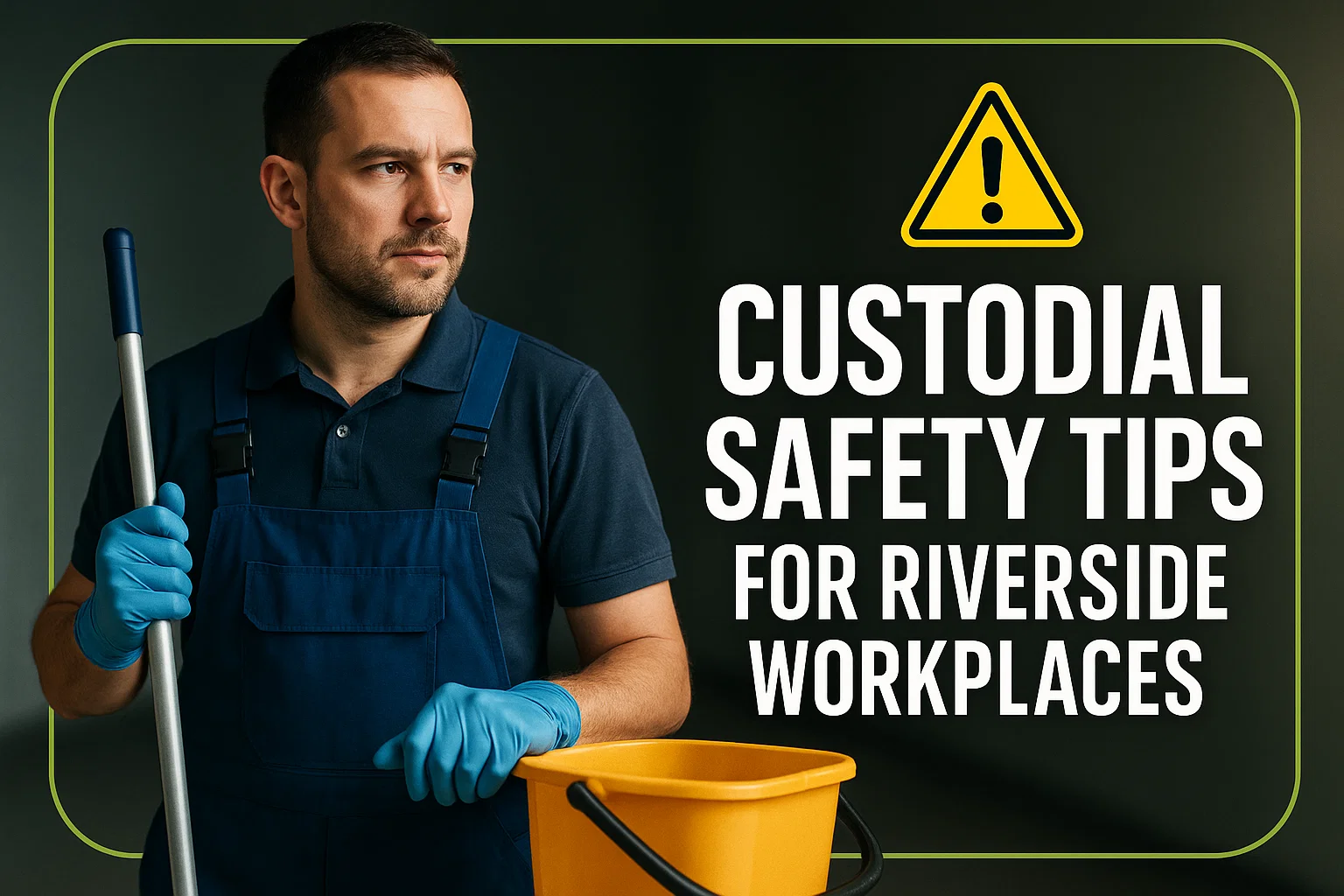
The most important part of the PPE is the right one. For this reason, the standard PPE used by custodians should be carefully selected so as to provide them with the best protection against chemical, biological and mechanical hazards.
- Gloves made of a material resistant to chemicals should be worn in order to protect the skin from irritation or burning.
- Wear safety goggles or face shields in case you are handling a hazardous liquid or a liquid to be disposed of, and it may splatter.
- Wear the right shoe with a sole that will make it non-slip.
- If you are working with a strong cleaner or in a place that is dusty, then take a deep breath and wear a mask on your face.
- Protective clothing, such as aprons or coveralls, may be used if the contamination risk of the particular task is high.
Ergonomics for Custodians
Cleaners need to be sure that ergonomic implementation is key to them not suffering from strain and musculoskeletal problems while they carry out their cleaning activities.
- It is advisable that you use adjustable tools and equipment to maintain your body in the right posture.
- Don’t repeat the same movements all the time; change the tasks to lessen the tiredness.
- Giving your muscles a chance to breathe and relax through regular breaks is a good idea.
- If you must, and the object is too heavy, lift it using your legs, not your back.
Bloodborne Pathogens
Facilities workers who may come into contact with waste products are advised to exercise great caution as to what they do with the waste, as the products may contain blood or other body fluids.
- Always use gloves and other protective equipment when the site to be cleaned has the potential for blood exposure.
- Follow the recommended practices by OSHA along with your workplace’s exposure control plan.
- Put all contaminated materials in the designated containers with biohazard symbols.
- Any and all activities involving bloodborne pathogens must be followed by thorough cleaning and disinfecting of surfaces.
- Any contact with a source of infection resulting in injury should be immediately reported for hire professional medical evaluation.
Custodial Safety in Laboratory Spaces
The labs are normally unsafe areas that should be handled with care because they contain chemicals, glassware, and specific types of waste.
- Familiarize yourself with the safety measures of the laboratory before cleaning.
- Do not confuse chemicals, and at the same time, do not clean the accident without knowing what it is.
- Put on the appropriate PPE, i.e., gloves, eye protection, and lab coats that are chemical-resistant.
- To begin with, you should dispose of the laboratory waste according to the hazardous waste disposal rules.
- Do not walk alone in sensitive places; keep the lab personnel with you.
Slip, Trip, and Fall Prevention
A large number of the most common accidents experienced by custodians at the workplace are slips, trips, and falls.
- The wet floor signs must be placed as soon as the floor is mopped or when the spills are cleaned up.
- Ensure all the cords and hoses are fastened and placed in a manner that human beings do not have any problem walking over them.
- The floors are supposed to be empty of rubbish, litter, and irregularities.
- Wear the right type of footwear, one that is good in traction.
- Do not leave ladders and step stools unchecked before using them and should only step on those surfaces that are stable and safe.
Common Job Hazards and Safety Tips for School Custodians
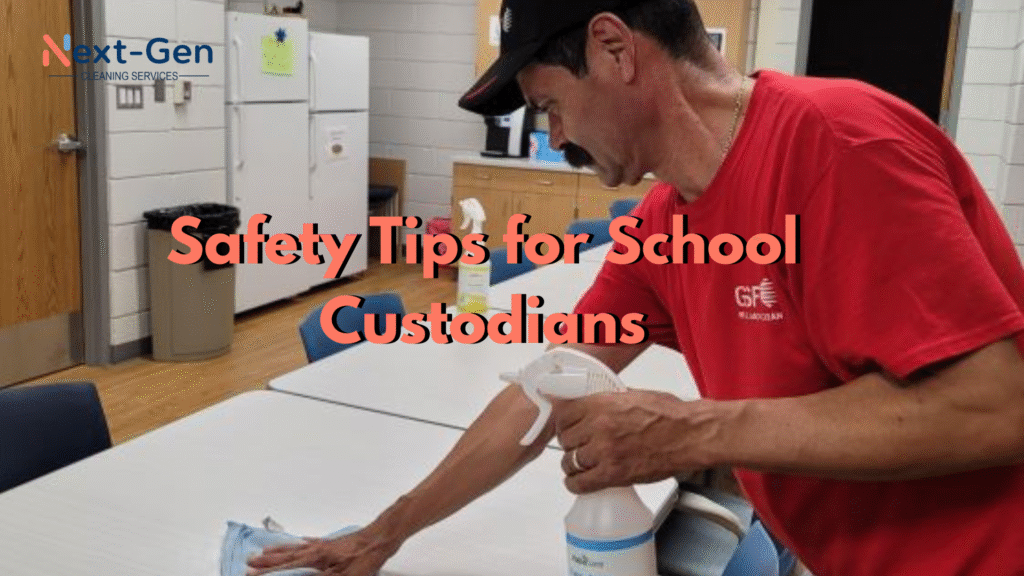
Work environments such as schools also bring out more issues, such as children, classrooms, and playgrounds.
- Planning of cleaning the area during off-peak times when the area is in use so that the disturbances will be minimal.
- Store cleaning chemicals in a secure place that cannot be accessed by students.
- Whenever possible, it is always a good idea to use environmentally friendly and non-toxic products that are used in the process of cleaning.
- Watch out for hazards like broken glasses, loose floor tiles or jammed lockers.
- Communication to school staff informs them about cleaning schedules and safety measures.
Main Types of Health Hazards in the Workplace
| Type of Hazards | Examples |
| Biological Hazards | Infectious bacteria and viruses; toxic moulds, fungi, and bacteria |
| Toxic Chemicals | Toxic liquids, solids, dusts, fumes, mists, vapours, and gases |
| Physical Agents | Noise, vibration, heat, sunlight, radiation |
| Poor Indoor Air Quality | Inadequate ventilation, temperature and humidity issues; toxic air contaminants; mould; emissions from furniture and flooring materials |
| Psychological Stress | Stress from lack of training and communication, poor work organization, technological changes without proper staff training, overexertion, and a negative work environment |
Proper Waste Disposal Methods
Proper waste handling is the best way to ensure the safety of custodians and other people in the workplace.
- The recyclable and non-recyclable waste should be separated in accordance with the stipulations of the local authorities.
- Sharps and medical waste should be handled in authorized containers only.
- Be careful when removing trash bags so that you do not cause spills and contamination.
- Implement strict hazardous waste protocols when dealing with chemicals or biohazardous materials.
- Waste bins should be cleaned properly to avoid the risk of pests.
Emergency Cleaning Protocols
Still, being prepared for emergencies at all times is a situation that guarantees a quick reaction and safety for the victims in case of spills or accidents.
- Make sure to always be informed of the location of the spill kits and other emergency supplies
- Do not hesitate to take the very first step in the workplace spill response plan when you witness a spill.
- When you are in an area that has had a hazardous spill, and you must clean the place, then you should evacuate the people who are in that place and isolate it.
- Use the right method for cleanup and get rid of the materials that have been contaminated in a safe way.
- Keep on incident information and report the occurrences without delay.
Riverside Workplace Safety Compliance
Riverside workplaces are tasked with the responsibility of ensuring that they comply with state and federal safety regulations so that the employees can be safe.
- Be in the know of the OSHA standards that are specifically for custodial work.
- Take part in safety training sessions, which are organized by your employer regularly.
- Practice good habits such as maintaining logs of inspections, incidents, and training.
- Besides that, use safety signs and other means of hazard communication to make sure that people are aware of the risks they face.
- Cooperate with facility managers to have the culture of safety as your brand.
Conclusion
Keeping safety as the top priority in the Riverside workplaces will always result in a better and more efficient environment for the people. That way custodians can wear PPE, practice good ergonomics, handle the hazards with care, and follow the established protocols to be a part of the safety program of the company and, in doing so, they will cut down the risks and lead to the safety of the environment The usage of these safety tips is necessary if the company wants to comply with the regulations that govern them and for employees’ health and happiness. For expert custodial services focused on safety and quality, trust Nextgen Cleaning Service.
FAQ’s
Gloves that are not permeable to chemicals, safety goggles, slip-resistant shoes, and respiratory protection when handling materials that can cause health hazards.
Wet floor signs should be used to remind people to avoid falling, make sure that the floor is not cluttered, tie cords down to avoid tripping and use the right type of shoes.
Yes, the custodians should wear chemical-resistant PPE and comply with the protocols of handling and disposing of the lab-specific items.
Exposure should be immediately revealed, the appropriate PPE should be used, and the workplace exposure control plans should be adhered to.
Once in a year or each time the new hazards or procedures are presented.